


Charpy V-Notch
Charpy V-Notch testing is a widely used method for evaluating the toughness and impact resistance of materials, especially metals. It is designed to measure how much energy a specimen can absorb before it fractures when struck suddenly. This test is important because many engineering materials may perform well under slow, static loads but fail unexpectedly under impact or low-temperature conditions. By using a controlled impact, the Charpy V-Notch test helps engineers understand how a material behaves in real service environments.The test specimen is usually a small rectangular bar with a precisely machined V-shaped notch in the center. The notch acts as a stress concentrator, making it easier to trigger fracture and reveal the material’s resistance to crack initiation and propagation. During the test, the specimen is placed horizontally on two supports, and a pendulum hammer strikes it opposite the notch. The energy absorbed by the specimen as it breaks is determined by the difference in the hammer’s height before and after impact. This absorbed energy is reported in joules and is used as an indicator of impact toughness.One of the key advantages of the Charpy V-Notch test is its simplicity and speed. It requires relatively small samples and standard equipment, yet it provides valuable information about material performance. The test is especially useful for comparing different materials, heat treatments, welding procedures, and manufacturing processes. It is also commonly used in quality control and in the development of structural materials for applications where sudden loading or brittle fracture could be dangerous.A major area of importance for Charpy V-Notch testing is the study of ductile-to-brittle transition behavior. Many metals, particularly steels, become less tough as temperature decreases. By performing the test at different temperatures, engineers can identify the range in which a material changes from ductile fracture, which absorbs more energy and shows plastic deformation, to brittle fracture, which absorbs less energy and fails more suddenly. This information is critical for designing components that must operate in cold climates, cryogenic environments, or other demanding conditions.The test results are influenced by several factors, including material composition, grain structure, heat treatment, specimen size, notch geometry, and test temperature. Because of this, standard testing procedures are followed to ensure consistency and repeatability. While the Charpy V-Notch test does not provide a complete measure of fracture behavior, it is a practical and reliable screening tool for toughness assessment.In modern engineering, Charpy V-Notch testing remains an essential method for understanding impact performance and ensuring material safety. It continues to support material selection, product design, and structural reliability across many industries.
Products
Category:
-
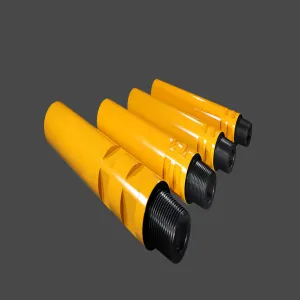
Engineering Superiority: The Metallurgical Science Behind High-Performance Raise Bore Drill Rods
Category: Raise Boring ToolsBrowse number: 39Number:Release time: 2026-06-22 14:59:26In the demanding landscape of underground mining, where drilling integrity can mean the difference between a project completed on time and an expensive, project-halting failure, the foundation of your equipment is paramount.
News
Category:
No search results found!
Case
Category:
No search results found!
Video
Category:
No search results found!
Download
Category:
No search results found!
Job
Category:
No search results found!
Featured Products
No search results found!



 Phone
Phone E-mail