


Drilling Through Hard Rock
Drilling through hard rock is a demanding task that requires powerful equipment, careful planning, and skilled operation. Hard rock formations are found in many construction, mining, and tunneling projects, and they present a much greater challenge than softer soil or sediment. Because of its high density and strength, hard rock cannot be removed easily with ordinary drilling tools. Instead, specialized methods and durable machinery are needed to break, cut, and penetrate the rock efficiently.The process usually begins with a detailed geological survey. Engineers study the type of rock, its hardness, fractures, and water conditions before selecting the right drilling method. This preparation is essential because different rock layers behave differently under pressure. Granite, basalt, and quartzite, for example, are extremely tough and abrasive, while limestone or shale may be easier to drill but still require strong tools. Choosing the wrong equipment can lead to slow progress, excessive wear, and higher costs.One of the key tools used in hard rock drilling is the drill bit. These bits are designed with special materials such as tungsten carbide or diamond tips to withstand intense heat and friction. As the bit rotates or strikes the rock, it crushes and chips away small pieces. In many cases, water or drilling fluid is pumped through the system to cool the bit and remove rock debris from the hole. This helps maintain drilling speed and prevents the equipment from overheating.Another important factor is drilling method. Rotary drilling, percussion drilling, and rotary-percussive drilling are commonly used depending on the project. Rotary drilling relies on continuous rotation to grind through rock, while percussion drilling uses repeated hammer-like impacts to fracture the material. Rotary-percussive drilling combines both actions and is often effective in very hard formations. Each method has its advantages, and the best choice depends on depth, rock strength, and the required hole size.Safety is also a major concern during hard rock drilling. The operation produces vibration, noise, dust, and flying fragments, all of which can be hazardous. Workers must wear protective gear and follow strict procedures to avoid injury. Machines must be regularly inspected because wear and tear can happen quickly when drilling through abrasive rock. Proper maintenance not only improves performance but also reduces the risk of accidents and equipment failure.Despite these challenges, drilling through hard rock plays an essential role in modern development. It makes possible the construction of tunnels, foundations, roads, dams, and mining shafts. Advances in drilling technology have made the process faster, more accurate, and more efficient than in the past. With the right knowledge, equipment, and safety measures, even the hardest rock can be successfully drilled.
Products
Category:
-
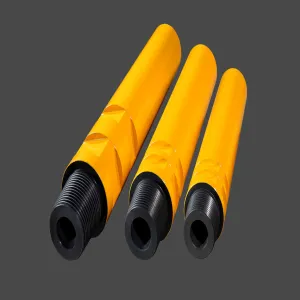
Drilling Through Hard Rock: How DI22 Drill Rods Excel in High-UCS Formations
Category: Raise Boring ToolsBrowse number: 25Number:Release time: 2026-06-22 11:25:57In the world of deep underground mining, not all rock is created equal. For contractors and mine operators, encountering high Unconfined Compressive Strength (UCS) formations—such as massive granite, hematite, or highly abrasive magnetite—is the ultimate test of your equipment’s integrity.
News
Category:
No search results found!
Case
Category:
No search results found!
Video
Category:
No search results found!
Download
Category:
No search results found!
Job
Category:
No search results found!
Featured Products
No search results found!



 Phone
Phone E-mail