


Optimizing Rate of Penetration
Optimizing Rate of Penetration (ROP) is a critical objective in drilling operations because it directly affects well delivery time, operational cost, and overall project efficiency. ROP refers to the speed at which a drill bit advances through rock formations, usually measured in feet per hour or meters per hour. A higher ROP can reduce drilling time, lower rig operating costs, and improve the economic performance of a well, but it must always be balanced against safety, hole quality, and equipment reliability.Effective ROP optimization begins with understanding the formation being drilled. Different rock types respond differently to weight on bit, rotary speed, hydraulic energy, and bit design. Soft formations may allow faster drilling, while harder or more abrasive formations require careful parameter control to prevent excessive wear or damage. Real-time formation evaluation and drilling data analysis help operators identify the best operating window for each interval. By using geological information, offset well data, and downhole measurements, drilling teams can select settings that improve penetration while maintaining stability.One of the main factors influencing ROP is weight on bit. Applying too little weight can slow drilling, while too much weight may cause bit damage, excessive vibrations, or borehole instability. Rotary speed is another important parameter. Increasing rotation can improve cutting action, but beyond a certain point it may reduce bit efficiency or accelerate wear. Hydraulic power also plays a major role. Proper flow rate and nozzle arrangement help clean cuttings from the bottom of the hole, prevent regrinding, and maintain efficient bit contact with the formation. Poor hole cleaning can significantly reduce ROP and increase the risk of stuck pipe or other drilling problems.Bit selection is another key element in ROP optimization. The bit must match the formation hardness, abrasiveness, and drilling objectives. A suitable bit design can improve cutting efficiency and reduce downtime caused by premature wear. Likewise, maintaining the drilling system in good condition is essential. Worn bearings, damaged drill string components, or poorly calibrated equipment can limit performance and reduce the achievable ROP. Vibration control is also important, since axial, lateral, and torsional vibrations can waste energy and damage tools.Modern drilling operations increasingly rely on data-driven optimization. Sensors and monitoring systems provide continuous information on torque, drag, pressure, vibration, and rate trends. Engineers can use this data to make timely adjustments and keep drilling parameters within the most productive range. Predictive models and automation tools can further enhance decision-making by recommending the best combinations of weight on bit, rotary speed, and circulation rate. Continuous improvement through post-well analysis also helps identify lessons learned and refine future drilling programs.In summary, optimizing Rate of Penetration is about achieving the fastest safe drilling performance possible. It requires a balanced approach that combines geology, equipment selection, hydraulic management, and real-time operational control. When done effectively, ROP optimization improves drilling efficiency, reduces cost, and supports more successful well delivery.
Products
Category:
-
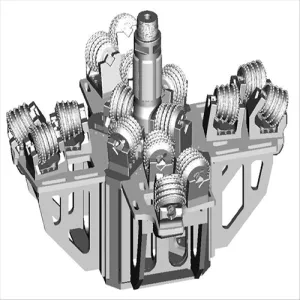
Optimizing Rate of Penetration (ROP) in Ultra-Hard Rock: Kinematics and Insert Profiles for RBM Cutters
Category: Raise Boring ToolsBrowse number: 10Number:Release time: 2026-07-24 17:08:28In mechanized underground mining and civil tunneling, the Raise Boring Machine (RBM) is prized for excavating shafts safely and accurately. However, this mechanized advantage frequently hits a brutal bottleneck: ultra-hard rock.
News
Category:
No search results found!
Case
Category:
No search results found!
Video
Category:
No search results found!
Download
Category:
No search results found!
Job
Category:
No search results found!
Featured Products
No search results found!



 Phone
Phone E-mail