


Torque/RPM ratios
Torque/RPM ratios describe the relationship between an engine’s twisting force and its rotational speed. Torque is the force that helps an engine move a vehicle or power a machine, while RPM, or revolutions per minute, measures how fast the engine is spinning. Together, these two values explain how an engine performs under different conditions.A high torque/RPM ratio usually means an engine can produce strong pulling power even at lower speeds. This is important for tasks such as towing, climbing hills, carrying heavy loads, or starting movement from a stop. In these situations, the engine does not need to spin very quickly to deliver useful power. Low-speed torque gives the engine a strong and responsive feel, especially when extra force is needed right away.A lower torque/RPM ratio often means the engine relies more on speed to generate power. Such engines may feel less forceful at low RPM, but they can become more effective as the speed increases. This type of performance is common in applications where rapid acceleration, high engine speed, or sustained operation at higher revolutions is required. In these cases, the engine may need to work harder and spin faster to reach its best output.The ratio between torque and RPM is closely related to power. Power combines force and speed, so an engine with moderate torque but very high RPM can still produce a large amount of power. On the other hand, an engine with very high torque at low RPM may feel powerful and controlled, even if its maximum power figure is not as high. This is why some engines are designed for low-end strength, while others are designed for high-speed performance.Engine design has a major effect on torque/RPM characteristics. Factors such as displacement, combustion efficiency, intake and exhaust flow, turbocharging, and gear ratios all influence how torque is delivered across the RPM range. Some engines provide a flat torque curve, meaning the torque stays relatively steady over a wide speed range. This makes performance smoother and more predictable. Others produce a sharp peak at a specific RPM, which can make them feel more aggressive but less flexible in daily use.For drivers and operators, understanding torque/RPM ratios helps in choosing the right engine for the right job. A vehicle used for hauling or off-road work often benefits from stronger low-speed torque. A vehicle designed for speed or high-performance operation may prioritize higher RPM capability. In machinery, the correct ratio can improve efficiency, reduce strain, and make operation easier.In summary, torque/RPM ratios are a key part of engine behavior. They show how force and speed work together and help explain why different engines perform differently. By understanding this relationship, it becomes easier to evaluate performance, select suitable equipment, and match an engine to its intended use.
Products
Category:
-
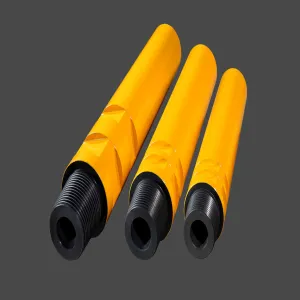
Drilling Through Hard Rock: How DI22 Drill Rods Excel in High-UCS Formations
Category: Raise Boring ToolsBrowse number: 25Number:Release time: 2026-06-22 11:25:57In the world of deep underground mining, not all rock is created equal. For contractors and mine operators, encountering high Unconfined Compressive Strength (UCS) formations—such as massive granite, hematite, or highly abrasive magnetite—is the ultimate test of your equipment’s integrity.
News
Category:
No search results found!
Case
Category:
No search results found!
Video
Category:
No search results found!
Download
Category:
No search results found!
Job
Category:
No search results found!
Featured Products
No search results found!



 Phone
Phone E-mail