In drilling engineering, people often focus on the sharpness of the Drill Bit and the toughness of the drill rod. But one small component is easy to overlook — the drill rod female connector. Located at one end of the drill rod with internal threads, it precisely pairs with the external threads of the male connector at the other end. Like a screw and nut, it connects individual drill rods into a drill string hundreds or even thousands of meters long. Without it, drill rods are just piles of steel pipe. Without it, the drill rig cannot transmit power to the depths of the earth.
This article uses multiple real engineering cases to explain the structural design of the drill rod female connector, the function of its key components, and its value in coal mine gas drainage, geological exploration, and oil drilling.
Basic Definition and Core Mission
The drill rod female connector is, as the name suggests, the connector with internal threads on the drill rod. Together with the male connector, it forms the connection system of the drill string. Its core mission can be summed up in four words: connect, transmit, seal, protect.
Connect — joins individual drill rods into a continuous long drill string.
Transmit — delivers torque, tension, and compression from the rig to the bit.
Seal — prevents drilling fluid, gas, and water from leaking at the connection.
Protect — through optimized design, protects the drill rod body and extends overall life.
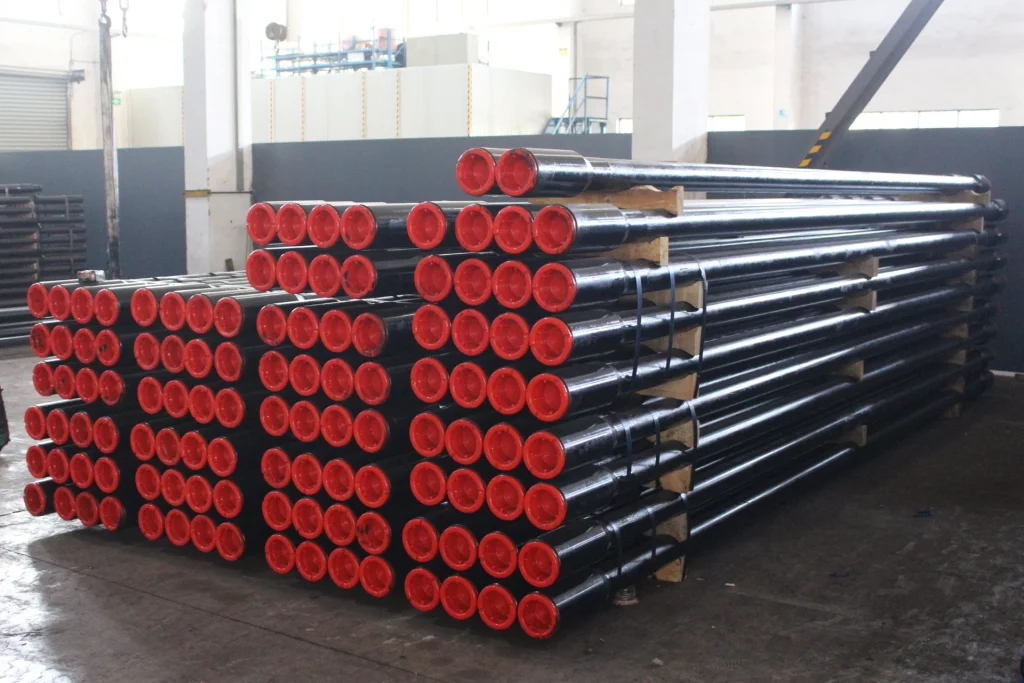
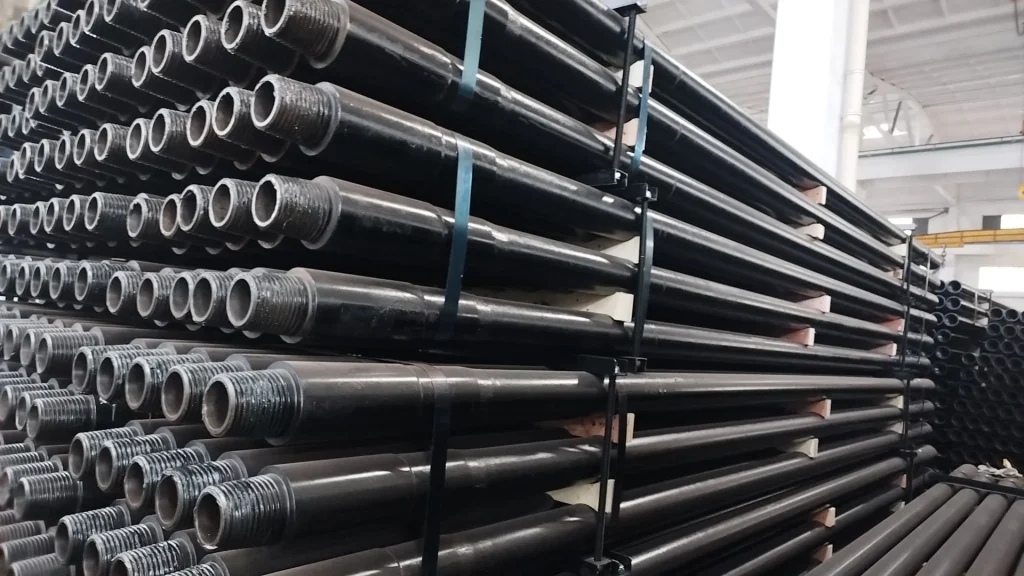
Structure Breakdown: Every Part Has Its Job
The design of the drill rod female connector revolves around three cores: high strength, tight sealing, and easy operation.
1. Body Material: High-Strength Alloy Steel
The connector body is forged from high-strength alloy steel, then strictly heat-treated and precision-machined. Why high-strength alloy steel?
During drilling, the female connector takes huge combined loads:
Tension — the drill string's own weight can reach tens or even hundreds of tons.
Compression — thrust force from the rig.
Torque — shear force from rotating the drill string.
Impact — vibration from the bit breaking rock.
In a coal mine gas drainage hole 300 meters deep, the drill string weighs about 3.5 tons. The female connector must handle peak tension over 5 tons. If the material is not strong enough, the connector could break or deform, causing dropped pipe or stuck pipe.
After quenching and tempering, the connector's hardness is controlled at 28–32 HRC — strong enough but still tough enough for the wet, sulfurous, high-wear underground environment.
2. Threads: The Core of Precision Fit
The internal threads of the female connector precisely match the external threads of the male connector. Thread parameters — tooth shape, pitch, taper — are precisely designed to ensure tight fit, even load distribution, and anti-galling (special surface treatment prevents thread damage during make-up/break-out).
3. Double Shoulder System: Primary and Secondary
This is the most ingenious part of the design. At the end of the female connector are two important shoulders — primary and secondary — each with a distinct job.
The primary shoulder handles axial positioning and sealing. When the female and male connectors are made up, the primary shoulders come together tightly, forming the first sealing barrier — preventing drilling fluid, gas, and water from leaking. It also limits the make-up depth, ensuring precise positioning. In a gas drainage project, the primary shoulder's seal directly affects the suction system's ability to maintain negative pressure.
The secondary shoulder prevents over-torquing. If make-up torque is too high, the secondary shoulders contact each other, sharing some of the load and preventing thread damage from overloading. This significantly increases fatigue life.
4. Friction Weld Connection: Thickened Transition
The female connector is not a separate part — it is connected to the drill rod body by friction welding. Friction welding uses heat from relative rotation to bring the contact surfaces to a plastic state, then applies forging pressure to complete the weld. Advantages: small heat-affected zone, high weld strength, no voids or cracks.
The weld area uses a thickened transition design — the outer diameter gradually increases from the rod body to the connector, forming a smooth taper. This design: increases strength (no weak point at the weld), reduces flow resistance (smooth taper reduces turbulence), and prevents stress concentration (no sudden cross-section change).
5. Wrench Flats: Flat Design for Easy Operation
The outer circle of the female connector is milled flat — these are the wrench flats. When workers make up or break out drill rods, they use large tongs on these flats to apply torque. The flat design increases grip area, prevents slipping, and reduces the risk of crushing the connector.
Case 1: Coal Mine Underground Gas Drainage
Background: A high-gas coal mine in Shanxi needed pre-drainage of coal seam gas to reduce gas concentration at the working face for safety. Designed hole depth: 280–350 meters, diameter 94 mm, mainly crossing holes.
Challenges: Soft coal prone to hole collapse, high gas pressure requiring excellent seal, trajectory control needed, drill string over 300 meters long — huge tension and torque on connectors.
Role of the female connector: Φ73 mm high-efficiency Spiral Drill Rods were used. The female connector was made of 42CrMoA high-strength alloy steel, vacuum heat-treated to 30 HRC. Friction welded with thickened transition.
Connection and force transmission: 30 rods were connected end-to-end into a 310-meter drill string. The female connector successfully transmitted 6,500 N·m torque and 8 tons of tension/compression.
Sealing: The double shoulder system achieved reliable sealing at 3,800 N·m make-up torque. Measured gas leakage was below 0.5% — far under the 2% limit.
Protection: The connector's outer diameter was 8 mm larger than the rod body, protecting the body from scraping against the hole wall during tripping.
Results:
Single-hole drilling time: 4.5 hours (traditional connectors took 6.2 hours)
Connector life: no visible cracks after 3,800 meters of drilling
Connection-related accidents: 0 (in a comparison project, traditional connectors had 3.2 accidents per 10,000 meters)
Case 2: Deep Geological Exploration Coring
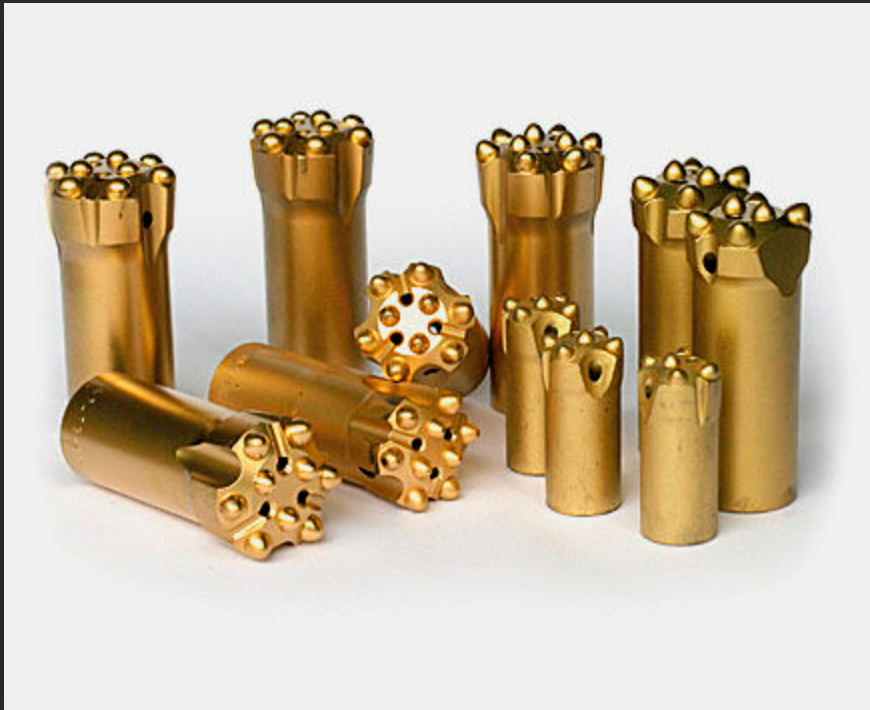
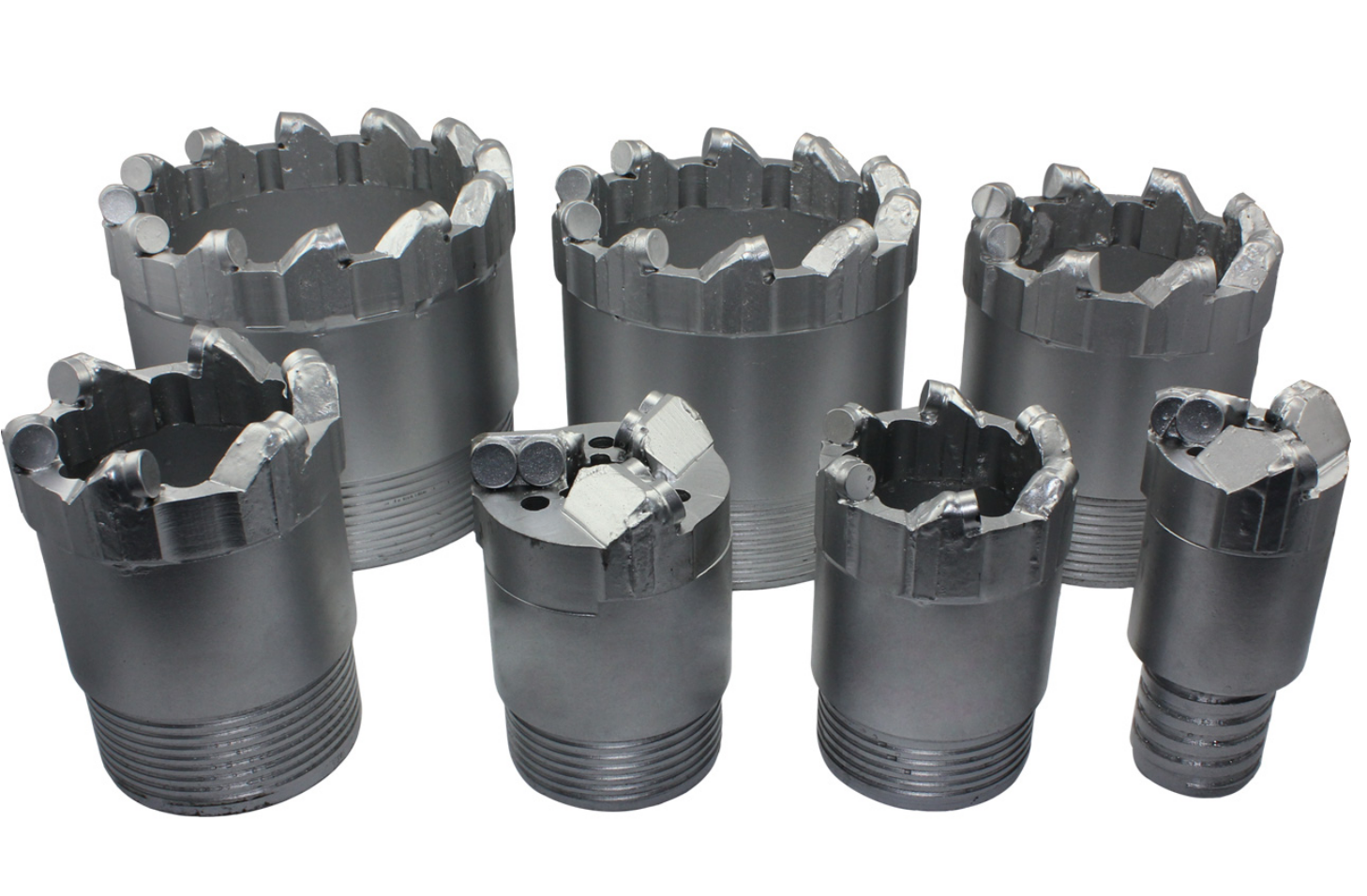
Background: A geological survey team in a southwestern mountain area needed an 850-meter coring hole for lead-zinc exploration, penetrating limestone, dolomite, and some granite.
Challenges: Deep hole — drill string weight 9 tons; complex formations with fracture zones and caves — severe vibration; frequent tripping for core recovery — many make/break cycles.
Role of the female connector: Φ89 mm geological drill rods were used. The female connector used higher-strength alloy steel (yield ≥1050 MPa) with a long round wedge pin auxiliary locking system to prevent loosening from vibration in deep holes.
Fatigue resistance: At 850 meters depth, the connector experienced large cyclic stress. After 1,000 tripping cycles, magnetic particle inspection showed no fatigue cracks.
Anti-loosening: The long round wedge pin maintained initial preload after 30 hours of drilling — no loosening.
Wrench flats: In the tight mountain drill site, workers used light tongs on the flats. Single make/break time was 45 seconds — 30% faster than round connectors.
Results:
Final hole depth: 852.3 meters
No connector replacement: the same set completed the entire hole
Average make/break time: 45 seconds
Seal performance: drilling fluid leak <0.3 L/min — met coring requirements
Case 3: Oil Field Directional Drilling
Background: An oil field in eastern China needed directional drilling — design depth 2,650 meters, horizontal displacement 850 meters, build section at 1,200–1,800 meters. The formation had high dip angle, and drill string loads were complex.
Challenges: Large depth — drill string weight over 25 tons; severe stress concentration in the build section; high drilling fluid pressure (circulation pressure 16 MPa) — tight seal required; many tripping cycles — high wear risk on connectors.
Role of the female connector: Φ127 mm oil drill pipes were used. The female connector had a double-shoulder high-torque design. Threads were phosphated for anti-galling.
High torque capacity: In the build section, the drill string needed to transmit up to 18,000 N·m torque. The double-shoulder design allowed the connector to handle this without thread deformation.
High-pressure sealing: The primary shoulder maintained zero leak at 16 MPa drilling fluid pressure. The secondary shoulder acted as a backup barrier, sharing load under extreme conditions.
Wear resistance: The connector's outer surface was hardfaced (wear-resistant alloy). In contact with casing and hole wall, wear rate was kept below 0.05 mm per 100 hours.
Results:
Drilling cycle: 32 days (planned 35 days — finished 3 days early)
Connector wear: after completion, maximum wear depth 0.3 mm (allowable 1.5 mm)
No connector-related incidents: no downhole problems caused by connector failure
Reusable: after cleaning and inspection, the same drill rod set was used on a second site
Daily Maintenance and Failure Prevention
Based on these cases, here are key maintenance points:
Before use: check threads for damage or rust; check primary and secondary shoulders for burrs or indentations; check wrench flats for deformation.
During use: control make-up torque within design limits; apply thread compound before each run; avoid forced stabbing.
After use: clean threads and shoulders; inspect for cracks (magnetic particle testing); measure outer diameter wear.
Common failure modes:
Trends and Outlook
Drill rod female connector technology continues to evolve:
Material upgrades — nano-strengthened alloy steel, yield strength over 1,200 MPa while maintaining toughness.
Thread optimization — asymmetric thread profiles for better load distribution and fatigue life.
Smart monitoring — embedded strain sensors for real-time torque and load monitoring, over-warning.
Surface engineering — DLC (diamond-like carbon) coatings or laser cladding for wear and galling resistance.
The Bottom Line
The drill rod female connector — the hidden link at the end of the drill rod — does not have the sharpness of a drill bit or the tall stature of a drill rod. But with its precision design and powerful functions, it is an indispensable core component of drilling operations. From gas drainage holes in Shanxi coal mines, to 850-meter geological exploration holes in southwestern mountains, to 2,650-meter directional wells in eastern oil fields — the female connector silently carries out its mission: connecting, transmitting, sealing, protecting. Every design detail — from the choice of high-strength alloy steel, to the precise fit of double shoulders, to the thickened transition of the friction weld, to the flattened wrench flats — matters for drilling efficiency and safety. This unassuming "connection partner" uses its strength and precision to safeguard every underground exploration.

 RELATED





 Phone
Phone E-mail
Comment
(0)